
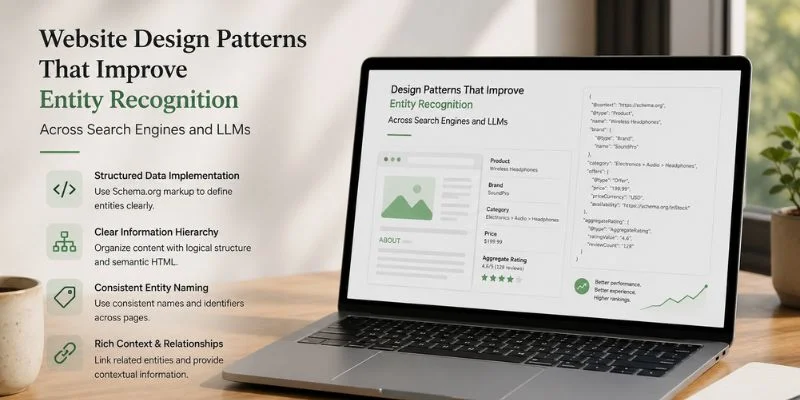
Search engines have changed the way they understand websites, influencing modern web design services. Instead of relying mainly on keywords, they now identify entities people, businesses, places, products, and concepts and the relationships between them. Large Language Models (LLMs) follow a similar approach by interpreting context rather than isolated words.
This shift means Website Design is no longer just about creating an attractive interface. The way pages are structured, linked, and organised helps search engines and AI systems understand your content more accurately. For businesses looking for a Website Design Company in Mumbai, understanding these design principles can lead to better visibility in both traditional search results and AI-powered search experiences. At Site Invention, we believe effective website design should combine user experience with semantic structure to help search engines and LLMs recognise your content more accurately..
What Is Entity Recognition in Search Engines and LLMs?
Entity recognition is the process of identifying real-world concepts, such as businesses, services, locations, or people, and understanding how they relate to one another. Instead of simply matching keywords, search engines analyse context to determine what a page is genuinely about.
For example, if a page discusses website design, user experience, semantic HTML, and structured data together, Google can recognise that the content belongs to the broader topic of modern website development rather than treating each term separately.
Well-structured content makes it easier for both search engines and AI systems to identify your expertise
Why Website Design Influences Semantic Understanding
Good website design creates a logical structure for both visitors and search crawlers. Every heading, navigation menu, internal link, and page hierarchy provides additional context.
A clear information architecture helps Google understand how topics relate across your website. At the same time, LLMs use these relationships to generate more accurate summaries and answers.
Semantic HTML also plays an important role. Proper heading tags, meaningful page sections, descriptive image alt text, and accessible layouts help AI interpret content with greater confidence.
When these elements work together, your website becomes easier to crawl, index, and retrieve for relevant queries.
Website Design Patterns That Improve Entity Recognition
Clear Content Hierarchy
Every page should follow a logical flow. Start with the primary topic, then introduce supporting information under descriptive headings. This structure allows AI systems to understand the importance of each section without guessing.
Semantic HTML Structure
Using proper HTML elements such as <header>, <main>, <section>, and <article> gives search engines additional context beyond visual design. These elements help define the purpose of content more accurately.
Consistent Heading Structure
Headings should clearly describe what readers will learn. Instead of vague titles like “Our Services”, use descriptive headings that explain the specific topic being covered.
Topic Clusters
Related content should connect naturally through internal links. For example, a page about website design Company can link to articles covering UX design, technical SEO, responsive websites, and website performance.
Contextual Internal Linking
Internal links should help readers discover related information instead of simply directing them to another page. Contextual linking strengthens topical relationships across your website.
Schema Markup
Structured data gives search engines explicit information about your business, articles, FAQs, and services. It removes ambiguity and improves the likelihood of enhanced search results.
Entity-Focused Navigation
Navigation should group related services and resources together. Logical menus make it easier for visitors and crawlers to understand your website’s overall structure.
Responsive Website Design
Responsive layouts improve usability across devices while supporting better indexing through Google’s mobile-first approach.
Accessibility-First Design
Accessible websites with descriptive labels, readable typography, and keyboard-friendly navigation benefit every visitor while improving machine understanding.
Fast Loading Pages
Fast websites improve user experience and help search engines crawl content more efficiently. Performance remains an important quality signal.
Traditional Website Design vs Entity-Focused Website Design
| Traditional Website Design | Entity-Focused Website Design |
| Focuses mainly on keywords | Focuses on topics and entities |
| Generic navigation | Semantic navigation |
| Isolated pages | Connected topic clusters |
| Minimal structured data | Comprehensive schema markup |
| Weak internal linking | Contextual internal linking |
| Basic page structure | Clear semantic hierarchy |
Technical Elements That Improve Entity Recognition
Several technical components help search engines interpret your website more effectively.
- Schema Markup provides structured information about organisations, articles, FAQs, and services.
- Breadcrumb Schema helps define page hierarchy.
- Canonical URLs prevent duplicate content confusion.
- XML Sitemaps guide search engines towards important pages.
- Robots.txt controls crawling behaviour.
- Core Web Vitals measure loading speed, responsiveness, and visual stability.
These technical foundations support stronger semantic understanding without changing the visible design.
Common Website Design Mistakes That Confuse Search Engines
Some design decisions make it harder for AI systems to understand your content.
| Avoid | Better Approach |
| Generic headings | Descriptive headings |
| Broken internal links | Relevant contextual links |
| Duplicate pages | Consolidated topic pages |
| Missing schema | Structured data implementation |
| Confusing navigation | Logical website architecture |
These improvements not only benefit search engines but also create a better experience for visitors.
Best Practices for AI-Friendly Website Design
A future-ready website should balance technical optimisation with excellent usability.
- Build pages around complete topics rather than isolated keywords.
- Use semantic HTML and descriptive headings.
- Implement relevant schema markup.
- Strengthen internal linking between related pages.
- Prioritise accessibility and responsive design.
- Monitor Core Web Vitals regularly.
These practices improve both search visibility and user experience over time.
How Site Invention Builds Future-Ready Websites
At Site Invention, website projects begin with a clear information architecture before visual design is considered. This approach ensures every page supports both user experience and semantic understanding.
As a Website Design Company in Mumbai, the focus extends beyond appearance to include technical SEO foundations, structured data, responsive layouts, accessibility, and long-term scalability. Modern web design services should help businesses communicate their expertise clearly to people as well as search engines.
Rather than treating design and SEO as separate activities, combining them from the beginning creates stronger content relationships and improves discoverability across Google Search and AI-powered platforms.
Website Design That Supports Better Entity Recognition
Modern search engines and LLMs understand meaning through entities, relationships, and context rather than keywords alone. That makes thoughtful Website Design an essential part of long-term search visibility.
Businesses should prioritise clear information architecture, semantic HTML, structured data, responsive layouts, and meaningful internal linking. Together, these elements help search engines understand content more accurately while creating a better experience for visitors.
As AI-powered search continues to evolve, websites that combine excellent user experience with strong semantic structure will be better positioned for Google AI Overviews, featured snippets, voice search, and future search technologies.
Frequently Asked Questions
Q1: What is entity recognition in website design?
Answer: It helps search engines and AI identify people, businesses, products, and topics on your website for better understanding and rankings.
Q2: Does website design affect Google AI Overviews?
Answer: Yes. Clear structure, semantic HTML, internal links, and schema markup help Google understand and summarize content accurately.
Q3: How does semantic HTML improve SEO?
Answer: Semantic HTML helps search engines understand page content, improving accessibility, indexing, and relevance.
Q4: What design elements help AI understand content?
Answer: Content hierarchy, internal linking, schema markup, semantic HTML, and responsive design provide clearer context for AI systems.
Q5: Is schema markup important for SEO?
Answer: Yes. Schema markup adds structured data that helps search engines and AI better understand your content and generate rich results.
