
Digital marketing has become essential for businesses aiming to grow in a competitive online environment. Whether you run a startup or an established brand, understanding digital marketing is key to reaching and converting your audience.
In simple terms, digital marketing, explained, is the use of online platforms such as search engines, social media, and email to promote products or services. However, success does not come from using these channels randomly. It comes from applying a structured approach built on core pillars.
These pillars help businesses create a system that drives consistent traffic, builds credibility, and generates measurable results over time.
Understanding the Importance of Digital Marketing in Business
Modern consumers rely heavily on digital platforms to make decisions. From researching products to comparing services, most of the journey happens online.
This highlights the importance of digital marketing in business. It allows companies to target specific audiences, measure performance, and optimize campaigns in real time.
For smaller companies, this also shows how digital marketing helps small businesses grow without requiring large budgets. A well-planned strategy can deliver long-term results through organic and targeted efforts. This is why many businesses, especially in competitive markets, choose to work with a reliable digital marketing agency in Mumbai to build a stronger online presence and scale efficiently.
1. Search Engine Optimization (SEO)
SEO is the foundation of long-term online visibility. It helps businesses appear in search results when users actively look for solutions.
Instead of focusing only on keywords, effective SEO prioritizes user intent. Search engines favor websites that provide clear, relevant, and valuable information.
A strong SEO strategy includes technical optimization, content quality, and user experience. Businesses that invest in SEO build a steady flow of organic traffic that supports long-term growth.
2. Content Marketing
Content marketing is essential for building trust and authority. It focuses on educating users rather than directly selling to them.
High-quality content helps answer user queries and supports search engine rankings. Over time, it positions a business as a reliable source of information.
Well-structured content often acts as a step-by-step digital marketing guide, helping users understand problems and solutions clearly. This approach improves engagement and increases the likelihood of conversions.
3. Social Media Marketing
Social media allows businesses to connect directly with their audience. It plays a key role in building brand awareness and maintaining engagement.
Success on social platforms depends on consistency and relevance. Businesses need to understand their audience’s behavior and create content that resonates with them.
Rather than focusing only on posting frequently, effective strategies prioritize meaningful interactions and value-driven communication.
4. Pay-Per-Click Advertising (PPC)
PPC advertising provides immediate visibility and is useful for generating quick results. It allows businesses to target specific audiences and keywords.
However, PPC requires careful planning. Without proper optimization, it can become expensive without delivering meaningful returns.
When combined with SEO and content marketing, PPC becomes more effective by supporting both short-term and long-term goals.
5. Email Marketing
Email marketing remains one of the most effective ways to build long-term relationships with customers.
It provides direct access to users who have already shown interest in your business. This makes it a powerful tool for nurturing leads and encouraging repeat engagement.
A successful email strategy focuses on personalization and timing. Relevant messages delivered at the right moment can significantly improve conversions.
6. Conversion Rate Optimization (CRO)
Driving traffic alone is not enough. Businesses must focus on converting visitors into customers.
CRO involves improving website elements to enhance user experience and increase conversions. Small changes in design, messaging, or page speed can make a noticeable difference.
This ensures that the traffic generated through other marketing efforts delivers actual business results.
7. Analytics and Data Tracking
Analytics is what makes digital marketing measurable and scalable. It helps businesses understand what is working and what needs improvement.
By tracking user behavior, traffic sources, and conversions, companies can refine their strategies continuously.
Data-driven decision-making reduces guesswork and improves overall efficiency, making marketing efforts more effective over time
How to Create a Digital Marketing Strategy
A successful strategy combines all the pillars into a structured system. It begins with defining clear goals and understanding the target audience.
Businesses must choose the right channels based on their audience and create content that addresses specific needs. As data is collected, strategies should be refined to improve performance.
This continuous process ensures sustainable growth and adaptability in a competitive market.
Why the Right Digital Marketing Approach Matters for Business Growth
Using multiple marketing channels without a clear strategy often leads to inconsistent results. A structured approach ensures that all efforts work together effectively.
SEO drives visibility, content builds trust, and analytics improves decision-making. When aligned properly, these elements create a system that supports long-term growth.
In competitive regions like Mumbai, businesses often look for a reliable digital marketing agency in Mumbai or an experienced digital marketing company to streamline their efforts and build scalable strategies.
Agencies like Site Invention focus on creating integrated frameworks that connect all aspects of digital marketing. This ensures that traffic not only increases but also converts into measurable outcomes
Strengthening Your Digital Growth Strategy
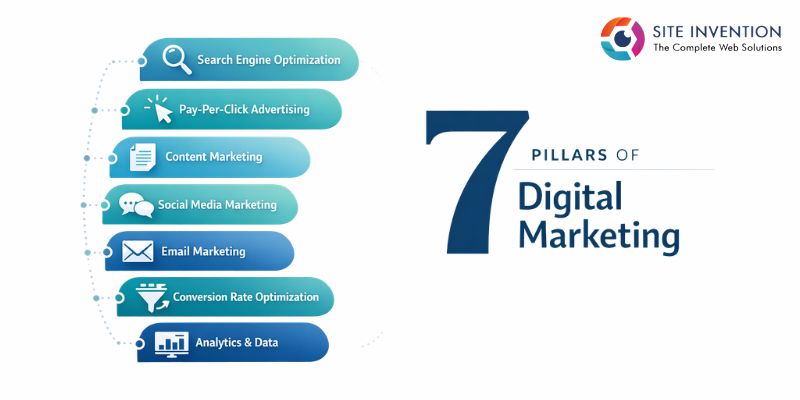
The 7 core pillars of digital marketing create a structured framework for building a scalable and results-driven online presence. Each pillar plays a distinct role, but their real impact comes from how effectively they work together to support long-term growth.
In today’s competitive landscape, businesses that focus on strategy, user intent, and continuous improvement tend to achieve more consistent and measurable outcomes. A well-connected approach ensures that every effort contributes to visibility, engagement, and conversions rather than operating in isolation.
For businesses aiming to improve their digital performance, taking the time to refine strategy and execution can make a significant difference. Working with experienced teams like Site Invention can help identify gaps, streamline efforts, and build a more effective digital marketing system aligned with your growth goals.
FAQs
Q1: What is digital marketing explained simply?
Answer: Digital marketing is the use of online channels to promote and grow a business.
Q 2: Why is digital marketing important for businesses?
Answer: It helps reach targeted audiences, track performance, and improve results.
Q3: How does digital marketing help small businesses?
Answer: It enables small businesses to compete using cost-effective strategies.
Q4: What are the core pillars of digital marketing?
Answer SEO, content marketing, social media, PPC, email marketing, CRO, and analytics.
Q5 What does a digital marketing company do?
Answer: A digital marketing company helps businesses plan, execute, and optimize online marketing strategies for growth.